28 Jun 2011

Franz Liszt - The Complete Etudes

Buy

CD 1:

  1. 12 Etudes d'exécution transcendante, S.139 - No.1 Prélude (Presto)
  2. 12 Etudes d'exécution transcendante, S.139 - No.2 Molto vivace
  3. 12 Etudes d'exécution transcendante, S.139 - No.3 Paysage (Poco adagio)
  4. 12 Etudes d'exécution transcendante, S.139 - No.4 Mazeppa (Presto)
  5. 12 Etudes d'exécution transcendante, S.139 - No.5 Feux follets (Allegretto)
  6. 12 Etudes d'exécution transcendante, S.139 - No.6 Vision (Lento)
  7. 12 Etudes d'exécution transcendante, S.139 - No.7 Eroica (Allegro)
  8. 12 Etudes d'exécution transcendante, S.139 - No.8 Wilde Jagd (Presto furioso)
  9. 12 Etudes d'exécution transcendante, S.139 - No.9 Ricordanza (Andantino)
10. 12 Etudes d'exécution transcendante, S.139 - No.10 Allegro agitato molto
11. 12 Etudes d'exécution transcendante, S.139 - No.11 Harmonies du soir (Andantino)
12. 12 Etudes d'exécution transcendante, S.139 - No.12 Chasse neige (Andante con moto)

CD 2:

  1. 3 Etudes de Concert, S.144 - No. 1 in A flat "Il lamento" (A capriccio - Allegro cantabile)
  2. 3 Etudes de Concert, S.144 - No. 2 in F minor "La leggierezza" (A capriccio - Quasi allegretto)
  3. 3 Etudes de Concert, S.144 - No. 3 in D flat "Un sospiro" (Allegro affettuoso)
  4. 2 Etudes de Concert, S.145 - No.1 Waldesrauschen
  5. 2 Etudes de Concert, S.145 - No.2 Gnomenreigen
  6. 6 Etudes d'exécution transcendante d'après Paganini, S.140 - 1. Trémolo
  7. 6 Etudes d'exécution transcendante d'après Paganini, S.140 - 2. Octaves
  8. 6 Etudes d'exécution transcendante d'après Paganini, S.140 - 3. La Campanella
  9. 6 Etudes d'exécution transcendante d'après Paganini, S.140 - 4. Arpeggio
10. 6 Etudes d'exécution transcendante d'après Paganini, S.140 - 5. La Chasse
11. 6 Etudes d'exécution transcendante d'après Paganini, S.140 - 6. Thème et variations

No, these aren't really the "complete" Liszt études. The centerpiece to this collection is Claudio Arrau's Transcendental Études, recorded when the pianist was in his early seventies. He brings out the music's breadth and poetry by way of ample rubatos, a rainbow of color, and total avoidance of anything mechanical for its own sake. Conversely, Nikita Magaloff's light-fingered proficiency in the Paganini Études seems rather dry and workaday in comparison. --Jed Distler

FLAC
Check Comments

26 Jun 2011

Hector Berlioz - Nuits d'ete, Herminie

Buy

  1. Nuits d'été, Op. 7: Villanelle "Quand viendra la saison nouvelle"
  2. Nuits d'été, Op. 7: Le spectre de la rose "Soulève la paupière close"
  3. Nuits d'été, Op. 7: Sur les lagunes (lamento) "Ma belle amie est morte"
  4. Nuits d'été, Op. 7: Absence "Reviens, reviens, ma bien-aimée !"
  5. Nuits d'été, Op. 7: Au cimetière (clair de lune) "Connaissez-vous la blanche tombe"
  6. Nuits d'été, Op. 7: L'île inconnue "Dites, la jeune belle !"
  7. Herminie

I don't think it is fanciful to hear decided preechoes in Herminie of Cassandra's fateful, searing music (quite apart from the very obvious dry-run for the Symphonie fantastique's main motif). This extraordinary work of 1828, almost as arresting as its near-contemporary Cléopâtre, received a grand, dramatic rendering from Plowright, one somewhat vitiated (as JW pointed Out) by the backward recording of the voice. Mireille Delunsch, a soprano new to me, sings it in a more compact, direct manner. Her tone is narrower and better focused than Plowright's, her French diction clearer. Herreweghe and his orchestra adopt a leaner, less vibrato-ridden sound, surely nearer to that of Berlioz's time, than that of their British counterparts. Delunsch also enters into the inner agony of the distraught, frustrated Herminie with a will. All in all I found the interpretation absorbing from start to finish.
The recording imparts a slight glare to her tone as it does to that of Balleys in the much more familiar Nuils d'été, but that is hardly enough to detract from what is an idiomatic, unfussy reading of this oft-recorded work. Her voice does not luxuriate in the more sensual moments of the cycle as does Crespin's in her famous version, nor is it quite as compelling emotionally as Baker's, but it has a clarity of profile, a definition of phrase that brings it close to de los Angeles's ever-attractive reading and, where strength of feeling is called for, Balleys provides it, as in "Au cimitière" and "Absence".
All the other versions are coupled differently. This one makes a sensible pairing with the cantata. What may also influence your choice is, again, Herreweghe's lean, well-pointed support which often emphasizes, rightly, the striking originality of Berlioz's scoring. It is certainly an interesting addition to the work's growing discography.
-- Gramophone [10/1995]


FLAC
Check Comments

25 Jun 2011

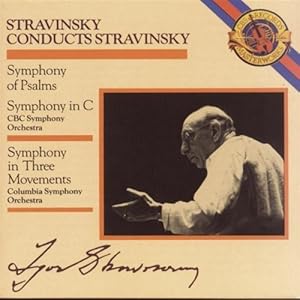
Stravinsky Conducts Stravinsky - Symphony of Psalms, Symphony in C, Symphony in Three Movements


Buy


  1. Symphony in Three Movements/I. Overture. Allegro
  2. Symphony in Three Movements/II. Andante - Interlude: L'istesso tempo
  3. Symphony in Three Movements/III. Con moto
  4. Symphony in C/I. Moderato alla breve
  5. Symphony in C/II. Larghetto concertante
  6. Symphony in C/III. Allegretto
  7. Symphony in C/IV. Largo - Tempo giusto, alla breve
  8. Symphony of Psalms (Rev, version, 1948)/Part I
  9. Symphony of Psalms (Rev, version, 1948)/Part II
10. Symphony of Psalms (Rev, version, 1948)/Part III

FLAC
Check Comments

21 Jun 2011

Bohuslav Martinu - Symphonys 1 & 2

Buy

1. Symphony No. 1, H. 289: No. 1 Moderato
2. Symphony No. 1, H. 289: No. 2 Scherzo: Allegro - Trio: Poco moderato
3. Symphony No. 1, H. 289: No. 3 Largo
4. Symphony No. 1, H. 289: No. 4 Allegro non troppo
5. Symphony No. 2, H. 295: No. 1 Allegro moderato
6. Symphony No. 2, H. 295: No. 2 Andante moderato
7. Symphony No. 2, H. 295: No. 3 Poco allegro
8. Symphony No. 2, H. 295: No. 4 Allegro

FLAC
Check Comments

20 Jun 2011

Igor Stravinsky - Symphony of Psalms, Symphony In C, Symphony In Three Movements - Simon Rattle

Buy

1. Symphony in Three Movements, for orchestra: 1. Quarter note = 160
2. Symphony in Three Movements, for orchestra: 2. Andante - Interlude: L'istesso tempo
3. Symphony in Three Movements, for orchestra: 3. Con moto
4. Symphony of Psalms, for chorus & orchestra: 1. Exaudi orationem meam
5. Symphony of Psalms, for chorus & orchestra: 2. Expectans expectavi Dominum
6. Symphony of Psalms, for chorus & orchestra: 3. Alleluia. Laudate Dominum
7. Symphony in C, for orchestra in C major: 1. Moderato alla breve
8. Symphony in C, for orchestra in C major: 2. Larghetto concertante
9. Symphony in C, for orchestra in C major: 3. Allegretto
10. Symphony in C, for orchestra in C major: 4. Largo - Tempo giusto, alla breve


"The allegro in Psalm 150 of the “Symphony of Psalms,” Stravinsky said, was inspired by his vision of Elijah’s chariot ascending to heaven. The triplets for horn and piano evoke the fiery tableau. This colorful moment is illustrated with bristling drama by Simon Rattle and the Berlin Philharmonic. In an exhilarating performance they balance textural clarity and grandeur in this work... The Berlin Radio Chorus sings immaculately, eloquently phrasing the “Alleluias” and delivering the Latin texts with striking urgency. The wind players are exceptional in this unusually scored piece, which forgoes violins, violas and clarinets. The winds also shine in lithe, tautly energetic performances of Stravinsky’s Symphony in C and Symphony in Three Movements, both also composed during his neo-Classical period." -- Vivien Schweitzer, New York Times [7/27/2008]
Stravinsky composed five works that used the word symphony in their titles. It is the three presented here that come the closest to the classical symphony as we know it, and even these have some substantial alterations. Sir Simon Rattle and the Berliners present taut and energetic performances in this latest installment of a series of live concert recordings by these forces to be released on EMI Classics.
The Symphony in Three Movements had its origins as a concerto for orchestra, and was begun in 1942. It was not completed nor was it even intended to be a symphony until Stravinsky was commissioned by the New York Philharmonic to write a sort of ‘victory’ work at the end of the Second World War. It received its first performance in 1946 at Carnegie Hall. Thicker and with more resonant sonorities than the other two works in this program, the music takes a bit more ear space to absorb. Rattle takes advantage of the Berlin orchestra’s brilliance by letting loose with a generous amount of sound. Yet he never sacrifices clarity. To these ears the live recording is a bit dry, but there is enough boom to ensure a thrill or two.
The Symphony of Psalms was commissioned by Serge Koussevitsky and the Boston Symphony to celebrate the Orchestra’s fiftieth anniversary. That the composer delivered a choral work was a bit of a surprise to all, but the choice of texts, and the work’s dedication first to the glory of God, and then to the orchestra was a clear indication that Stravinsky had not only rediscovered his Russian Orthodox roots, but had begun to delve into the thick of Roman Catholic theology. The result is an austere but rather poignant work, curiously orchestrated and full of rhythmic contrast. Rattle captures the devotional spirit of the work, but it seemed to these ears that the chorus phoned it in. The tone is professional enough, but there is little true commitment to the texts. The choir lacks warmth for the most part, and this is particularly evident in the gorgeous moments of repose at the beginning and end of the final Psalm.
The Symphony in C was also American-inspired, and was given its first performance in Chicago, the orchestra to whom it is dedicated, in 1940. Stravinsky clearly had the classical symphony in mind as he cast the work in the über-conservative key of C major, and laid it out in the traditional four movements; vigorous and fast on the outer edges with a slow movement and scherzo for the inner workings. Of the three performances, this one is the most convincing, with Rattle drawing clear and even sparse sounds from the orchestra and paying careful attention to Stravinsky’s very well constructed counterpoint. The first movement gives us ample joie de vivre as well.
It seems logical in these days of monumental recording costs for small returns that even an orchestra as well funded as Berlin would lean toward live recordings instead of meticulously edited studio projects. It is rather refreshing to hear an orchestra play through whole works on the fly as it were. Berlin’s audiences are most kind as there is no hint of noise whatever. EMI’s entertaining “Opendisc” format, by which you can access a plethora of multi-media material via the internet and rack up points toward free downloads is an added bonus.
-- Kevin Sutton, MusicWeb International

FLAC
Check Comments

19 Jun 2011

Antonin Dvorak - Symphony 9 "From the New World" , Overtures


Buy

CD 1
1. Adagio - Allegro Molto
2. Largo
3. Scherzo: Molto Vivace
4. Allegro Con Fuoco

CD 2
1. In Nature's Realm, Op. 91
2. Carnival, Op. 92
3. Othello, Op. 93


FLAC
Check Comments

18 Jun 2011

Dmitri Shostakovich - Symphony 4 - Haitink


Buy

  1. I. Allegretto poco moderato - Presto
  2. II. Moderato con moto
  3. III. Largo - Allegro
FLAC
Check Comments

17 Jun 2011

Camille Saint Saens - Symphony 3 "Organ", Oliver Messiaen - L'Ascension


Buy
  1. Saint-Saens Symphony 3: I. Adagio - Allegro moderato
  2. Saint-Saens Symphony 3: I. Poco adagio
  3. Saint-Saens Symphony 3: II. Allegro moderato - Presto - Allegro moderato
  4. Saint-Saens Symphony 3: II. Maestoso - Allegro
  5. Messiaen L'Ascension : Majesté du Christ demandant sa gloire à son Père
  6. Messiaen L'Ascension : Alleluias sereins d’une âme qui désire le ciel
  7. Messiaen L'Ascension : Alleluia sur la trompette, alleluia sur la cymbale
  8. Messiaen L'Ascension : Prière du Christ montant vers son Père
FLAC
Check Comments

16 Jun 2011

Anton Bruckner - Symphony 8 - Pierre Boulez


Buy

  1. Symphony No.8 in C minor - Ed. Haas - 1. Allegro moderato
  2. Symphony No.8 in C minor - Ed. Haas - 2. Scherzo: Allegro moderato
  3. Symphony No.8 in C minor - Ed. Haas - 3. Adagio: Feierlich langsam; doch nicht schleppend
  4. Symphony No.8 in C minor - Ed. Haas - 4. Finale: Feierlich, nicht schnell

When word got out that Pierre Boulez was planning to record the mammoth Eighth Symphony of Anton Bruckner, the reaction in some quarters was akin to the announcement that a leading Marxist intellectual had accepted the CEO position at General Motors. While Boulez has already acclimated the music world to his latter-day interest in the core symphonic repertory with his recent performances of Mahler, the sense of incongruity with Bruckner's mystical solemnity seemed too great a leap to expect from the famous apostle of the avant-garde.
Forget about those prejudices--Boulez's accomplishment here is arguably even more successful than his accounts of Mahler. It also offers a fascinatingly fresh view of the great symphonist, who some feel will finally come into his own in the 21st century. Stereotypes of Boulez's razor-sharp, "cerebral" bias don't do justice to the sensuous pleasure he can elicit from the Vienna Philharmonic's musicians, a detailed alertness to Bruckner's instrumental touches that are too often overshadowed by focus on his architectonics. Boulez, of course, has a command of the latter as well, and his brisk pacing of the Robert Haas compilation/edition creates a sense of momentum and flow that's particularly striking in his brilliant realization of the Scherzo and the Finale.
True, there's less of the "apocalyptic" (an epithet sometimes given to this symphony), of the crushing tragedy, one hears in Karajan's canonical interpretation or the fine version by Skrowaczewski, and Boulez's chary avoidance of pauses in the celestial Adagio cheats us of the near-death-experience-in-music that comes through in Celibidache's glacial but visionary concert recording. But that sense of detail--witness the balance of horns and strings in the Adagio's closing pages--counts for much. Moreover, this live recording gains warmth from the acoustics of the Abbey Church of St. Florian--where Bruckner served as organist, and where his body is buried--and benefits from excellent engineering. Ironic as it might seem, Boulez may indeed win new converts to Bruckner with this performance. --Thomas May, Amazon.com

FLAC
Check Comments

15 Jun 2011

Hector Berlioz - Symphonie Fantastique, Cleopatre

Buy

  1. Symphonie fantastique, Op. 14: I. Reveries: Largo - Passions: Allegro agitato e appassionato
  2. Symphonie fantastique, Op. 14: II. Un Bal (Valse): Allegro non troppo
  3. Symphonie fantastique, Op. 14: III. Scene aux Champs: Adagio
  4. Symphonie fantastique, Op. 14: IV. Marche au Supplice: Allegretto non troppo
  5. Symphonie fantastique, Op. 14: V. Songe d'une Nuit du Sabbat: Larghetto - Allegro
  6. La mort de Cleopatre: Recitative: C'en est donc fait! ma honte est assuree
  7. La mort de Cleopatre: Meditation: Grands Pharaons, nobles Lagides


On this 2010 super audio CD, Yannick Nézet-Séguin and the Rotterdam Philharmonic Orchestra present an exceptional orchestral showcase that Berlioz fans will relish. The performance of Symphonie fantastique is filled with sharp details and startling effects in the high-quality multichannel recording, yet the sound of the orchestra is rich and full, so the most desired audio features are captured without sacrificing one for the other. The dynamic range is quite wide, from the barely perceptible pianissimos of the first movement to the shattering orchestral tutti in the last two movements, so listeners may find some minor volume adjustments are necessary along the way. But the excitement of the performance is worth the trouble, and Nézet-Séguin's fluid and lively interpretation makes this one of the most compelling versions of Symphonie fantastique available in the SACD format. The lyric scene Cléopâtre, also known as La mort de Cléopâtre, which was one of Berlioz's early attempts to win the Prix de Rome, is provided as filler. Soprano Anna Caterina Antonacci gives the scene great emotional energy and an operatic character, and the orchestra plays with vitality and vivid colors, so this minor work is at least a fun bonus that adds value to the package.
-All Music


FLAC
Check Comments

14 Jun 2011

Hector Berlioz - La Revolution Grecque


Buy

CD 1:
  1. Sara, Belle D'indolence 
  2. Tristia: I. Meditation Religieuse: Ce Monde Entier N'est Qu'une Ombre Fugitive 
  3. Tristia: II. La Mort D'Ophelie
  4. Tristia: III. Marche Funebre Pour La Derniere Scene d'Hamlet
  5. Le ballet des ombres
  6. Chant Sacre (Version 1)
  7. Veni Creator Spiritus
  8. Tantum Ergo Sacramentum
  9. La Revolution Grecque: I. Recit & Air: Leve-toi, Fils De Sparte! 
  10. La Revolution Grecque: II. Choeur: Mais La Voix Du Dieu Des Armees
  11. La Revolution Grecque: III. Priere: Astre Terrible Et Saint, Guide Les Pas Du Brave!
  12. La Revolution Grecque: IV. Final: Des Sommets De L'Olympe 
CD 2:
  1. Le Cinq mai
  2. La mort d'Orphee: Introduction
  3. La mort d'Orphee: Recit & Air: Pretresses De Bacchus... O Seul Bien Qui Me Reste!
  4. La mort d'Orphee: Recit: Quels Cris Affreux Se Font Entendre?
  5. La mort d'Orphee: Bacchanale: O Dieu Puissant, Fils De Latone... O Bacchus Evoe!
  6. La mort d'Orphee: Tableau Musical
  7. Chant Guerrier
  8. Chanson a boire
  9. Chant des chemins de fer
  10. Chant sacre
  11. Hymne pour la concsecration du nouveau tabernacle

  These rarely recorded pieces typify two of Berlioz's chief characteristics: his capacity to perplex, astound and deafen the multitudes, and his equal ability to touch the inner imagination of the listener with the lightest of hands.
The pieces on these discs typify rather neatly two of Berlioz's chief characteristics: his capacity to perplex, astound and deafen the multitudes, and his equal ability to touch the inner imagination of the listener with the lightest of hands. The two aspects correspond roughly to the public and private Berlioz. The public Berlioz gets a good airing here. The earliest piece is the Scene Heroique, known as La Revolution grecque, which he wrote at the end of 1825, around his 22nd birthday. As Hugh Macdonald, general editor of The New Berlioz Edition says, it looks back to the revolutionary choruses of the 1790s with its cries of `victoire' and `triomphe' and this may be one reason why, after one performance in 1828, Berlioz claimed to have destroyed it — a claim he also made for the Messe solennelle written in 1824, but which has also survived. La Revolution is nothing like so interesting as the Mass, either for what it is or for what it portends, but there are the odd characteristic touches, such as the sudden emergence of soft, pliant material out of rumbustious noise. The energy, too, is of a voltage way above the ordinary for 1820s France, and Michel Plasson and his forces respond well. But unlike the Mass, this work lacks distinctive melodic material, even if the central `Priere' has some lovely sounds. Of the remaining public pieces, the Chant des chemins defer is highly entertaining and wonderfully fit for its purpose — the inauguration of the Paris-Lille railway line in 1846. Writing the piece took Berlioz either three whole nights, or three hours (voice parts) and one night (instrumentation), depending on which version you like to believe. Certainly one doesn't get the impression he agonised over it, and its directness is very much part of its charm — although what I take to be the odd encouraging vocals from the chorus master don't add anything of value. The Chanson boire is fun, the Chant guerrier downright weird, with rhythms and phrasing that barely make sense today. Much the finest work of all is Le Cinq mai, written in 1835 to commemorate the death of Napoleon. Greeks, booze and railways were one thing, the Emperor quite another, and Berlioz's admiration is reflected in the music's brooding intensity. He conducted it with regular success in his concerts despite what he called the 'abominable' literary quality of the verse, and despite what one sour reviewer referred to as the novel absence of bass drum and ophicleides. The excellent Chant sacri comes somewhere between being wholly public and wholly private. And it may be a problem for critics who, overtaxed by the bicentenary celebrations, have claimed Berlioz was unable to write a good tune. Most of the private pieces are familiar enough, and personally I can never hear Sara la baigneuse too often (soft porn transmuted into high art), while Le ballet des ombres (incidentally, one of Henri Dutilleux's favourite pieces) creates a world unlike any other.
The choir Les Elements sing with vigour and precision and the sopranos make a lovely sound. Plaudits, too, to David Bismuth for some virtuoso piano playing. As so often, I feel the chorus is placed too far from the microphone, and whereas in the pieces with piano this is not a problem, against the orchestra many of the words are really hard to catch. The three male soloists are placed further forward and all do well, even if Nicolas Rivenq's voice is a little dry at climaxes. Laurent Naouri is superb, Rolando VillazOn exciting, with only very occasional tuning trouble. All in all, these discs, giving us over an hour of Berlioz not available elsewhere in the catalogue, are very welcome.
-- Roger Nichols, Gramophone [5/2004]

FLAC
Check Comments

13 Jun 2011

Dmitri Shostakovich - Symphonys 5 & 9 - Bernard Haitink


Buy

  1. Symphony No.5 in D minor, Op.47 - 1. Moderato
  2. Symphony No.5 in D minor, Op.47 - 2. Allegretto
  3. Symphony No.5 in D minor, Op.47 - 3. Largo
  4. Symphony No.5 in D minor, Op.47 - 4. Allegro non troppo
  5. Symphony No.9 in E flat, Op.70 - 1. Allegro
  6. Symphony No.9 in E flat, Op.70 - 2. Moderato
  7. Symphony No.9 in E flat, Op.70 - 3. Presto -
  8. Symphony No.9 in E flat, Op.70 - 4. Largo -
  9. Symphony No.9 in E flat, Op.70 - 5. Allegretto
 This release vividly illustrates Bernard Haitink's variable success with the Shostakovich symphonies. Alongside a few really excellent performances (Symphonies Nos. 5, 8, 13, and 15), there are some that are more or less good (Symphonies Nos. 1, 4, 7, 9, 10, 11, and 14), as well as a few outright failures (Symphonies Nos. 2, 3, 6, and 12). You'll note that, Symphony No. 6 aside, Haitink does least well with what are generally conceded to be the weakest works. Indeed, his interpretations are always strong on basic musicality, but short on humor, bitterness, garishness, bombast--in short, those moments of extreme tension or emotional excess that give some of this music its unique excitement and character. Nevertheless, it would be unfair to say that Haitink underplays the Fifth Symphony. Aside from the magnificent orchestral contribution, there's plenty of fire in the first movement climax (and a coda of ghostly beauty), ample poetry and intensity in the Largo, and a finale that takes its triumph at face value (though I personally prefer the more ambivalent readings of, say, Maxim Shostakovich, Kondrashin, Sanderling, or Rostropovich). In the Ninth, though, Haitink misses some of the clowning in the first movement, which ideally needs a marginally less brisk tempo to make its points. His Scherzo also lacks devilishness and bravura, while the finale never really catches fire. He's at his best in the slow music, the lovely second movement especially, but that's only two-fifths of the work. Still, the performance certainly isn't terrible, and the Fifth ranks among the best. So at mid-price I'd not hesitate a minute. --David Hurwitz, ClassicsToday.com

FLAC
Check Comments