Buy
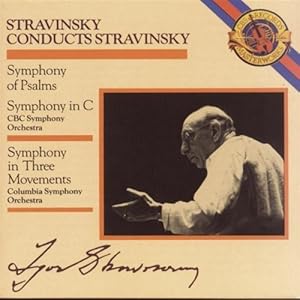
| 1. Symphony in Three Movements, for orchestra: 1. Quarter note = 160 |
|
| 2. Symphony in Three Movements, for orchestra: 2. Andante - Interlude: L'istesso tempo |
|
| 3. Symphony in Three Movements, for orchestra: 3. Con moto |
|
| 4. Symphony of Psalms, for chorus & orchestra: 1. Exaudi orationem meam |
|
| 5. Symphony of Psalms, for chorus & orchestra: 2. Expectans expectavi Dominum |
|
| 6. Symphony of Psalms, for chorus & orchestra: 3. Alleluia. Laudate Dominum |
|
| 7. Symphony in C, for orchestra in C major: 1. Moderato alla breve |
|
| 8. Symphony in C, for orchestra in C major: 2. Larghetto concertante |
|
| 9. Symphony in C, for orchestra in C major: 3. Allegretto |
|
| 10. Symphony in C, for orchestra in C major: 4. Largo - Tempo giusto, alla breve |
"The allegro in Psalm 150 of the “Symphony of Psalms,” Stravinsky said, was inspired by his vision of Elijah’s chariot ascending to heaven. The triplets for horn and piano evoke the fiery tableau. This colorful moment is illustrated with bristling drama by Simon Rattle and the Berlin Philharmonic. In an exhilarating performance they balance textural clarity and grandeur in this work... The Berlin Radio Chorus sings immaculately, eloquently phrasing the “Alleluias” and delivering the Latin texts with striking urgency. The wind players are exceptional in this unusually scored piece, which forgoes violins, violas and clarinets. The winds also shine in lithe, tautly energetic performances of Stravinsky’s Symphony in C and Symphony in Three Movements, both also composed during his neo-Classical period." -- Vivien Schweitzer, New York Times [7/27/2008]
Stravinsky composed five works that used the word symphony in their titles. It is the three presented here that come the closest to the classical symphony as we know it, and even these have some substantial alterations. Sir Simon Rattle and the Berliners present taut and energetic performances in this latest installment of a series of live concert recordings by these forces to be released on EMI Classics.
The Symphony in Three Movements had its origins as a concerto for orchestra, and was begun in 1942. It was not completed nor was it even intended to be a symphony until Stravinsky was commissioned by the New York Philharmonic to write a sort of ‘victory’ work at the end of the Second World War. It received its first performance in 1946 at Carnegie Hall. Thicker and with more resonant sonorities than the other two works in this program, the music takes a bit more ear space to absorb. Rattle takes advantage of the Berlin orchestra’s brilliance by letting loose with a generous amount of sound. Yet he never sacrifices clarity. To these ears the live recording is a bit dry, but there is enough boom to ensure a thrill or two.
The Symphony of Psalms was commissioned by Serge Koussevitsky and the Boston Symphony to celebrate the Orchestra’s fiftieth anniversary. That the composer delivered a choral work was a bit of a surprise to all, but the choice of texts, and the work’s dedication first to the glory of God, and then to the orchestra was a clear indication that Stravinsky had not only rediscovered his Russian Orthodox roots, but had begun to delve into the thick of Roman Catholic theology. The result is an austere but rather poignant work, curiously orchestrated and full of rhythmic contrast. Rattle captures the devotional spirit of the work, but it seemed to these ears that the chorus phoned it in. The tone is professional enough, but there is little true commitment to the texts. The choir lacks warmth for the most part, and this is particularly evident in the gorgeous moments of repose at the beginning and end of the final Psalm.
The Symphony in C was also American-inspired, and was given its first performance in Chicago, the orchestra to whom it is dedicated, in 1940. Stravinsky clearly had the classical symphony in mind as he cast the work in the über-conservative key of C major, and laid it out in the traditional four movements; vigorous and fast on the outer edges with a slow movement and scherzo for the inner workings. Of the three performances, this one is the most convincing, with Rattle drawing clear and even sparse sounds from the orchestra and paying careful attention to Stravinsky’s very well constructed counterpoint. The first movement gives us ample joie de vivre as well.
It seems logical in these days of monumental recording costs for small returns that even an orchestra as well funded as Berlin would lean toward live recordings instead of meticulously edited studio projects. It is rather refreshing to hear an orchestra play through whole works on the fly as it were. Berlin’s audiences are most kind as there is no hint of noise whatever. EMI’s entertaining “Opendisc” format, by which you can access a plethora of multi-media material via the internet and rack up points toward free downloads is an added bonus.
-- Kevin Sutton, MusicWeb International
FLAC
Check Comments