I'm sure nearly all my links are dead now, along with this blog. Due to a move I left my discs behind, I have no access to them now. Maintaining something like this can be a pain. I've neglected it, as a result the amount of disappointed comments requesting re uploading have slipped by.
6 Sept 2013
25 Feb 2012
The Complete Quintets - Johannes Brahms

Disc 1:

1. Piano Quintet in F minor, Op.34 - 1. Allegro non troppo
2. Piano Quintet in F minor, Op.34 - 2. Andante, un poco adagio
3. Piano Quintet in F minor, Op.34 - 3. Scherzo (Allegro)
4. Piano Quintet in F minor, Op.34 - 4. Finale (Poco sostenuto - Allegro non troppo)
5. String Quintet No.1 in F, Op.88 - 1. Allegro non troppo, ma con brio
6. String Quintet No.1 in F, Op.88 - 2. Grave ed appassionato - Allegretto vivace - Tempo I - Presto
7. String Quintet No.1 in F, Op.88 - 3. Allegro energico
Disc 2:
1. String Quintet No.2 in G, Op.111 - 1. Allegro non troppo, ma con brio
2. String Quintet No.2 in G, Op.111 - 2. Adagio
3. String Quintet No.2 in G, Op.111 - 3. Un poco allegretto
4. String Quintet No.2 in G, Op.111 - 4. Vivace ma non troppo presto
5. Clarinet Quintet in B minor, Op.115 - 1. Allegro
6. Clarinet Quintet in B minor, Op.115 - 2. Adagio
7. Clarinet Quintet in B minor, Op.115 - 3. Andantino - Presto non assai, ma con sentimento
8. Clarinet Quintet in B minor, Op.115 - 4. Con moto
FLAC
Check Comments
24 Feb 2012
Igor Stravinsky - Firebird, The Rite of Spring - Alexander Rahbari

| 1. The Firebird Suite: Introduction | |
| 2. The Firebird Suite: L'oiseau de feu et sa danse | |
| 3. The Firebird Suite: Variation de l'oiseau de feu | |
| 4. The Firebird Suite: Ronde de Princesses | |
| 5. The Firebird Suite: Danse infernale du roi Kastchei | |
| 6. The Firebird Suite: Berceuse | |
| 7. The Firebird Suite: Finale | |
| 8. Le sacre du printemps (The Rite of Spring) (1943 version): Part 1: L'adoration de la terre | |
| 9. Le sacre du printemps (The Rite of Spring) (1943 version): Part 2: Le sacrifice |
FLAC
Check Comments
27 Jul 2011
E.J. Moeran - String Quartet in A minor, Sonata for Vionin and Piano

| 1. String Quartet In A Minor: Allegro |
| 2. String Quartet In A Minor: Andante con moto |
| 3. String Quartet In A Minor: Rondo: Allegro vivace |
| 4. Violin Sonata In E Minor: Allegro non troppo |
| 5. Violin Sonata In E Minor: Lento |
| 6. Violin Sonata In E Minor: Vivace e molto ritmico FLAC Check Comments |
24 Jul 2011
Brian Ferneyhough - Music For Flute

- Miniatures for Flute & Piano: I.
- Miniatures for Flute & Piano: II.
- Miniatures for Flute & Piano: III.
- Miniatures for Flute & Piano: IV.
- Casandra's Dream Song
- Unity Capsule: I
- Unity Capsule: II
- Unity Capsule: III
- Superscriptio
- Carceri d'Invenzione IIb
- Mnemosyne
Check Comments
23 Jul 2011
Brian Ferneyhough - Chamber Music

| 1. Flurries |
| 2. Trittico per G.S. |
| 3. Incipits |
| 4. Coloratura |
| 5. In Nomine a 3 |
| 6. Allgebrah |
Ferneyhough is leading the way in England in contemporary classical music by charting such uncharted musical waters as the works represented here. Not trying to make this easy, he likes pushing the envelope, making you pay attention to the journeys he takes everyone on --MidWest Record
Award winning, highly respected and totally uncompromising - Brian Ferneyhough is fearless in his quest for new musical structures and boundaries. The works on this CD, all recorded here for the first time, are masterpieces of the modern age. In 'Allgebrah', especially, Ferneyhough demonstrates the inspiration he received from the work of troubled genius artist, Adolf Wölfli, one of whose works we have chosen for the cover art, Courtesy of the Arts Museum, Berne.
FLAC
Check Comments
21 Jul 2011
Brian Ferneyhough - Terrain, No Time (at all)

| 1. Terrain |
| 2. No Time At All |
| 3. La Chute d'Icare |
| 4. Incipits |
| 5. Les Froissements d'Ailes de Gabriel FLAC Check Comments |
20 Jul 2011
Brian Ferneyhough - Choral Music

| 1. Missa Brevis: Kyrie |
| 2. Missa Brevis: Gloria |
| 3. Missa Brevis: Sanctus |
| 4. Missa Brevis: Benedictus |
| 5. Missa Brevis: Agnus Dei |
| 6. The Doctrine of Similarity: Amphibolies I |
| 7. The Doctrine of Similarity: Dust to Dusk |
| 8. The Doctrine of Similarity: Cannot Cross |
| 9. The Doctrine of Similarity: Moteltus absconditus |
| 10. The Doctrine of Similarity: Amphibolies II |
| 11. The Doctrine of Similarity: But Even Fire is Light |
| 12. The Doctrine of Similarity: Sometimes |
| 13. The Doctrine of Similarity: Anagrammatica |
| 14. The Doctrine of Similarity: Dew and Die |
| 15. The Doctrine of Similarity: Schein |
| 16. The Doctrine of Similarity: Dusts to Dusks |
| 17. The Doctrine of Similarity: Amphibolies III |
| 18. The Doctrine of Similarity: Salute |
| 19. Two Marian Motets: Ave mater gloriosa salvatoris |
| 20. Two Marian Motets: Alma redemptoris Mater |
| 21. Stelae for Failed Time: Parts 1-5 |
All authentic pieces for choir, though they all need a hugely proficient one like the BBC Singers. The mass is particularly welcome, for it's one of the most important of Ferneyhough's early works Powerfully wrought and fiercely concentrated, it shows how far stylistically Ferneyhough had developed and set the agenda for the extraordinary series of pieces that followed in the next decade --The Guardian
FLAC
Check Comments
19 Jul 2011
Louis Vierne - Carillon de Westminster, Charles-Mariei Widor - Organ Symphony No. 5

| 1. Carillion De Westminster |
| 2. Symphonie For Organ No. 5 In F Minor - Allegro Vivace |
| 3. Symphonie For Organ No. 5 In F Minor - Allegro Cantabile |
| 4. Symphonie For Organ No. 5 In F Minor - Andantino Quasi Allegretto |
| 5. Symphonie For Organ No. 5 In F Minor - Adagio |
| 6. Symphonie For Organ No. 5 In F Minor - Toccatta- Allegro |
FLAC
Check Comments
16 Jul 2011
Ludwig Van Beethoven - 9 Symphonies - Karajan (1963)

CD 1:
| 1. Symphony No.1 in C, Op.21 - 1. Adagio molto - Allegro con brio |
| 2. Symphony No.1 in C, Op.21 - 2. Andante cantabile con moto |
| 3. Symphony No.1 in C, Op.21 - 3. Menuetto (Allegro molto e vivace) |
| 4. Symphony No.1 in C, Op.21 - 4. Finale (Adagio - Allegro molto e vivace) |
| 5. Symphony No.3 in E flat, Op.55 -"Eroica" - 1. Allegro con brio |
| 6. Symphony No.3 in E flat, Op.55 -"Eroica" - 2. Marcia funebre (Adagio assai) |
| 7. Symphony No.3 in E flat, Op.55 -"Eroica" - 3. Scherzo (Allegro vivace) |
| 8. Symphony No.3 in E flat, Op.55 -"Eroica" - 4. Finale (Allegro molto) |
CD 2:
| 1. Symphony No.2 in D, Op.36 - 1. Adagio molto - Allegro con brio |
| 2. Symphony No.2 in D, Op.36 - 2. Larghetto |
| 3. Symphony No.2 in D, Op.36 - 3. Scherzo (Allegro) |
| 4. Symphony No.2 in D, Op.36 - 4. Allegro molto |
| 5. Symphony No.4 in B flat, Op.60 - 1. Adagio - Allegro vivace |
| 6. Symphony No.4 in B flat, Op.60 - 2. Adagio |
| 7. Symphony No.4 in B flat, Op.60 - 3. Allegro vivace |
| 8. Symphony No.4 in B flat, Op.60 - 4. Allegro ma non troppo |
CD 3:
| 1. Symphony No.5 in C minor, Op.67 - 1. Allegro con brio | |||||||||||||
| 2. Symphony No.5 in C minor, Op.67 - 2. Andante con moto | |||||||||||||
| 3. Symphony No.5 in C minor, Op.67 - 3. Allegro | |||||||||||||
| 4. Symphony No.5 in C minor, Op.67 - 4. Allegro | |||||||||||||
| 5. Symphony No.6 in F, Op.68 -"Pastoral" - 1. Erwachen heiterer Empfindungen bei der Ankunft auf dem Lande: Allegro ma non troppo | |||||||||||||
| 6. Symphony No.6 in F, Op.68 -"Pastoral" - 2. Szene am Bach: (Andante molto mosso) | |||||||||||||
| 7. Symphony No.6 in F, Op.68 -"Pastoral" - 3. Lustiges Zusammensein der Landleute (Allegro) | |||||||||||||
| 8. Symphony No.6 in F, Op.68 -"Pastoral" - 4. Gewitter, Sturm (Allegro) | |||||||||||||
| 9. Symphony No.6 in F, Op.68 -"Pastoral" - 5. Hirtengesang. Frohe und dankbare Gefühle nach dem Sturm: Allegretto CD 4:
By general consensus, Herbert von Karajan's first (1963) Beethoven cycle for Deutsche Grammophon is the best of the four (!) that he recorded. The Berlin Philharmonic was in top form, and they had not yet made an artistic fetish out of the bland smoothness that typified the conductor's later recordings of this music (and just about everything else). Karajan's squeaky clean, emotionally cool Beethoven will always be something of an acquired taste, but this set makes the best possible case for it. --David Hurwitz FLAC Check Comments |
9 Jul 2011
Igor Stravinsky - The Rite of Spring, Firebird Suite, Sergei Prokofiev - Scythian Suite

| 1. The Rite of Spring Part One - Adoration of the Earth: Introduction. Lento |
| 2. The Rite of Spring The Augurs of Spring |
| 3. The Rite of Spring Mock Abduction |
| 4. The Rite of Spring Spring Round Dances |
| 5. The Rite of Spring Games of the Rival Tribes |
| 6. The Rite of Spring Procession of the Wise Elders |
| 7. The Rite of Spring Dance of the Earth |
| 8. The Rite of Spring Part Two - The Sacrifice: Introduction. Largo |
| 9. The Rite of Spring Mystical Circles of the Young Girls |
| 10. The Rite of Spring Glorification of the Chosen Victim |
| 11. The Rite of Spring Summoning of the Ancestors |
| 12. The Rite of Spring Ritual of the Ancestors |
| 13. The Rite of Spring Sacrificial Dance (The Chosen Victim) |
| 14. Suite from "The Firebird" (1919 version)/Introduction |
| 15. Suite from "The Firebird" (1919 version)/The Firebird and its Dance |
| 16. Suite from "The Firebird" (1919 version)/Variation of the Firebird |
| 17. Suite from "The Firebird" (1919 version)/The Princesses' Round |
| 18. Suite from "The Firebird" (1919 version)/Infernal Dance of King Kashchei |
| 19. Suite from "The Firebird" (1919 version)/Lullaby |
| 20. Suite from "The Firebird" (1919 version)/Finale |
| 21. Scythian Suite, I. The Adoration of Veles and Ala: Allegro feroce. Poco meno mosso |
| 22. Scythian Suite, II. The Enemy God and the Dance of the Black Spirits. Allegro sostenuto |
| 23. Scythian Suite, III. Night. Andantino - Poco piu mosso |
| 24. Scythian Suite, IV. The Glorious Departure of Lolli and the Procession of the Sun. Tempestoso - Allegro (Quasi doppio movimento) - Andante sostenuto Considering that Stravinsky's Rite of Spring has been around for nearly a century, it's surprising that even today, conductors literally get lost while attempting to beat through it--and that goes for some of the biggest names. Difficult as the piece is, conductors have no excuse for major lapses, now that this recording is available for study. Bernstein not only keeps complete control of the complex rhythms and constantly-switching meters throughout the work but he also interprets it with fire and sweep and emotional versatility. The Firebird is equally breathtaking. It's priceless, too, for the fabulous horn solo played by the New York Philharmonic's legendary James Chambers. --Gwendolyn Freed FLAC Check Comments |
2 Jul 2011
Richard Strauss - Don Quixote, Robert Schumann - Cello Concerto

| 1. Don Quixote - Introduction : Mäßiges Zeitmaß |
| 2. Don Quixote - Thema: Mäßig - Don Quixote. The Knight of the Mournful Countenance |
| 3. Don Quixote - Variation I: Gemächlich - Departure. The adventure of the windmills |
| 4. Don Quixote -Variation II: Kriegerisch - The battle with the sheep |
| 5. Don Quixote - Variation III: Mäßiges Zeitmaß - Sancho's wishes, peculiarities of speech and maxims |
| 6. Don Quixote - Variation IV: Etwas breiter - The adventure with the procession of penitents |
| 7. Don Quixote - Variation V: Sehr langsam - Don Quixote's vigil during the summer night |
| 8. Don Quixote - Variation VI: Schnell - Dulcinea |
| 9. Don Quixote - Variation VII: Ein wenig ruhiger als vorher - Don Quixote's ride through the air |
| 10. Don Quixote - Variation VIII: Gamächlich - The Trip On The Enchanted Boat |
| 11. Don Quixote - Variation IX: Schnell und stürmisch - The attack on the medicant friars |
| 12. Don Quixote - Variation X: Viel breiter - The duel and return home |
| 13. Don Quixote - Epilogue: Sehr ruhig - Don Quixote's mind clears. Death of Don Quixote |
| 14. Concerto for Cello and Orchestra in A minor, Op. 129 : I. Nicht zu schnell - |
| 15. Concerto for Cello and Orchestra in A minor, Op. 129 : II. Langsam - Etwas lebhafter - Schneller - |
| 16. Concerto for Cello and Orchestra in A minor, Op. 129: III. Sehr lebhaft - (Cadenza) - Im Tempo - Schneller |
FLAC
Check Comments
28 Jun 2011
Franz Liszt - The Complete Etudes

CD 1:
| 1. 12 Etudes d'exécution transcendante, S.139 - No.1 Prélude (Presto) |
| 2. 12 Etudes d'exécution transcendante, S.139 - No.2 Molto vivace |
| 3. 12 Etudes d'exécution transcendante, S.139 - No.3 Paysage (Poco adagio) |
| 4. 12 Etudes d'exécution transcendante, S.139 - No.4 Mazeppa (Presto) |
| 5. 12 Etudes d'exécution transcendante, S.139 - No.5 Feux follets (Allegretto) |
| 6. 12 Etudes d'exécution transcendante, S.139 - No.6 Vision (Lento) |
| 7. 12 Etudes d'exécution transcendante, S.139 - No.7 Eroica (Allegro) |
| 8. 12 Etudes d'exécution transcendante, S.139 - No.8 Wilde Jagd (Presto furioso) |
| 9. 12 Etudes d'exécution transcendante, S.139 - No.9 Ricordanza (Andantino) |
| 10. 12 Etudes d'exécution transcendante, S.139 - No.10 Allegro agitato molto |
| 11. 12 Etudes d'exécution transcendante, S.139 - No.11 Harmonies du soir (Andantino) |
| 12. 12 Etudes d'exécution transcendante, S.139 - No.12 Chasse neige (Andante con moto) |
CD 2:
| 1. 3 Etudes de Concert, S.144 - No. 1 in A flat "Il lamento" (A capriccio - Allegro cantabile) |
| 2. 3 Etudes de Concert, S.144 - No. 2 in F minor "La leggierezza" (A capriccio - Quasi allegretto) |
| 3. 3 Etudes de Concert, S.144 - No. 3 in D flat "Un sospiro" (Allegro affettuoso) |
| 4. 2 Etudes de Concert, S.145 - No.1 Waldesrauschen |
| 5. 2 Etudes de Concert, S.145 - No.2 Gnomenreigen |
| 6. 6 Etudes d'exécution transcendante d'après Paganini, S.140 - 1. Trémolo |
| 7. 6 Etudes d'exécution transcendante d'après Paganini, S.140 - 2. Octaves |
| 8. 6 Etudes d'exécution transcendante d'après Paganini, S.140 - 3. La Campanella |
| 9. 6 Etudes d'exécution transcendante d'après Paganini, S.140 - 4. Arpeggio |
| 10. 6 Etudes d'exécution transcendante d'après Paganini, S.140 - 5. La Chasse |
| 11. 6 Etudes d'exécution transcendante d'après Paganini, S.140 - 6. Thème et variations |
No, these aren't really the "complete" Liszt études. The centerpiece to this collection is Claudio Arrau's Transcendental Études, recorded when the pianist was in his early seventies. He brings out the music's breadth and poetry by way of ample rubatos, a rainbow of color, and total avoidance of anything mechanical for its own sake. Conversely, Nikita Magaloff's light-fingered proficiency in the Paganini Études seems rather dry and workaday in comparison. --Jed Distler
FLAC
Check Comments
26 Jun 2011
Hector Berlioz - Nuits d'ete, Herminie

| 1. Nuits d'été, Op. 7: Villanelle "Quand viendra la saison nouvelle" |
| 2. Nuits d'été, Op. 7: Le spectre de la rose "Soulève la paupière close" |
| 3. Nuits d'été, Op. 7: Sur les lagunes (lamento) "Ma belle amie est morte" |
| 4. Nuits d'été, Op. 7: Absence "Reviens, reviens, ma bien-aimée !" |
| 5. Nuits d'été, Op. 7: Au cimetière (clair de lune) "Connaissez-vous la blanche tombe" |
| 6. Nuits d'été, Op. 7: L'île inconnue "Dites, la jeune belle !" |
| 7. Herminie |
I don't think it is fanciful to hear decided preechoes in Herminie of Cassandra's fateful, searing music (quite apart from the very obvious dry-run for the Symphonie fantastique's main motif). This extraordinary work of 1828, almost as arresting as its near-contemporary Cléopâtre, received a grand, dramatic rendering from Plowright, one somewhat vitiated (as JW pointed Out) by the backward recording of the voice. Mireille Delunsch, a soprano new to me, sings it in a more compact, direct manner. Her tone is narrower and better focused than Plowright's, her French diction clearer. Herreweghe and his orchestra adopt a leaner, less vibrato-ridden sound, surely nearer to that of Berlioz's time, than that of their British counterparts. Delunsch also enters into the inner agony of the distraught, frustrated Herminie with a will. All in all I found the interpretation absorbing from start to finish.
The recording imparts a slight glare to her tone as it does to that of Balleys in the much more familiar Nuils d'été, but that is hardly enough to detract from what is an idiomatic, unfussy reading of this oft-recorded work. Her voice does not luxuriate in the more sensual moments of the cycle as does Crespin's in her famous version, nor is it quite as compelling emotionally as Baker's, but it has a clarity of profile, a definition of phrase that brings it close to de los Angeles's ever-attractive reading and, where strength of feeling is called for, Balleys provides it, as in "Au cimitière" and "Absence".
All the other versions are coupled differently. This one makes a sensible pairing with the cantata. What may also influence your choice is, again, Herreweghe's lean, well-pointed support which often emphasizes, rightly, the striking originality of Berlioz's scoring. It is certainly an interesting addition to the work's growing discography.
-- Gramophone [10/1995]
FLAC
Check Comments
25 Jun 2011
Stravinsky Conducts Stravinsky - Symphony of Psalms, Symphony in C, Symphony in Three Movements
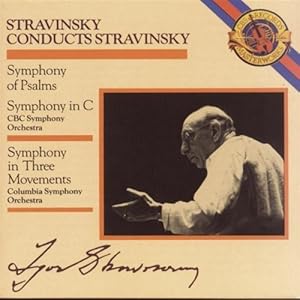
Buy
| 1. Symphony in Three Movements/I. Overture. Allegro |
| 2. Symphony in Three Movements/II. Andante - Interlude: L'istesso tempo |
| 3. Symphony in Three Movements/III. Con moto |
| 4. Symphony in C/I. Moderato alla breve |
| 5. Symphony in C/II. Larghetto concertante |
| 6. Symphony in C/III. Allegretto |
| 7. Symphony in C/IV. Largo - Tempo giusto, alla breve |
| 8. Symphony of Psalms (Rev, version, 1948)/Part I |
| 9. Symphony of Psalms (Rev, version, 1948)/Part II |
| 10. Symphony of Psalms (Rev, version, 1948)/Part III |
FLAC
Check Comments
21 Jun 2011
Bohuslav Martinu - Symphonys 1 & 2

FLAC
Check Comments
20 Jun 2011
Igor Stravinsky - Symphony of Psalms, Symphony In C, Symphony In Three Movements - Simon Rattle

| 1. Symphony in Three Movements, for orchestra: 1. Quarter note = 160 | |
| 2. Symphony in Three Movements, for orchestra: 2. Andante - Interlude: L'istesso tempo | |
| 3. Symphony in Three Movements, for orchestra: 3. Con moto | |
| 4. Symphony of Psalms, for chorus & orchestra: 1. Exaudi orationem meam | |
| 5. Symphony of Psalms, for chorus & orchestra: 2. Expectans expectavi Dominum | |
| 6. Symphony of Psalms, for chorus & orchestra: 3. Alleluia. Laudate Dominum | |
| 7. Symphony in C, for orchestra in C major: 1. Moderato alla breve | |
| 8. Symphony in C, for orchestra in C major: 2. Larghetto concertante | |
| 9. Symphony in C, for orchestra in C major: 3. Allegretto | |
| 10. Symphony in C, for orchestra in C major: 4. Largo - Tempo giusto, alla breve |
"The allegro in Psalm 150 of the “Symphony of Psalms,” Stravinsky said, was inspired by his vision of Elijah’s chariot ascending to heaven. The triplets for horn and piano evoke the fiery tableau. This colorful moment is illustrated with bristling drama by Simon Rattle and the Berlin Philharmonic. In an exhilarating performance they balance textural clarity and grandeur in this work... The Berlin Radio Chorus sings immaculately, eloquently phrasing the “Alleluias” and delivering the Latin texts with striking urgency. The wind players are exceptional in this unusually scored piece, which forgoes violins, violas and clarinets. The winds also shine in lithe, tautly energetic performances of Stravinsky’s Symphony in C and Symphony in Three Movements, both also composed during his neo-Classical period." -- Vivien Schweitzer, New York Times [7/27/2008]
Stravinsky composed five works that used the word symphony in their titles. It is the three presented here that come the closest to the classical symphony as we know it, and even these have some substantial alterations. Sir Simon Rattle and the Berliners present taut and energetic performances in this latest installment of a series of live concert recordings by these forces to be released on EMI Classics.
The Symphony in Three Movements had its origins as a concerto for orchestra, and was begun in 1942. It was not completed nor was it even intended to be a symphony until Stravinsky was commissioned by the New York Philharmonic to write a sort of ‘victory’ work at the end of the Second World War. It received its first performance in 1946 at Carnegie Hall. Thicker and with more resonant sonorities than the other two works in this program, the music takes a bit more ear space to absorb. Rattle takes advantage of the Berlin orchestra’s brilliance by letting loose with a generous amount of sound. Yet he never sacrifices clarity. To these ears the live recording is a bit dry, but there is enough boom to ensure a thrill or two.
The Symphony of Psalms was commissioned by Serge Koussevitsky and the Boston Symphony to celebrate the Orchestra’s fiftieth anniversary. That the composer delivered a choral work was a bit of a surprise to all, but the choice of texts, and the work’s dedication first to the glory of God, and then to the orchestra was a clear indication that Stravinsky had not only rediscovered his Russian Orthodox roots, but had begun to delve into the thick of Roman Catholic theology. The result is an austere but rather poignant work, curiously orchestrated and full of rhythmic contrast. Rattle captures the devotional spirit of the work, but it seemed to these ears that the chorus phoned it in. The tone is professional enough, but there is little true commitment to the texts. The choir lacks warmth for the most part, and this is particularly evident in the gorgeous moments of repose at the beginning and end of the final Psalm.
The Symphony in C was also American-inspired, and was given its first performance in Chicago, the orchestra to whom it is dedicated, in 1940. Stravinsky clearly had the classical symphony in mind as he cast the work in the über-conservative key of C major, and laid it out in the traditional four movements; vigorous and fast on the outer edges with a slow movement and scherzo for the inner workings. Of the three performances, this one is the most convincing, with Rattle drawing clear and even sparse sounds from the orchestra and paying careful attention to Stravinsky’s very well constructed counterpoint. The first movement gives us ample joie de vivre as well.
It seems logical in these days of monumental recording costs for small returns that even an orchestra as well funded as Berlin would lean toward live recordings instead of meticulously edited studio projects. It is rather refreshing to hear an orchestra play through whole works on the fly as it were. Berlin’s audiences are most kind as there is no hint of noise whatever. EMI’s entertaining “Opendisc” format, by which you can access a plethora of multi-media material via the internet and rack up points toward free downloads is an added bonus.
-- Kevin Sutton, MusicWeb International
FLAC
Check Comments
19 Jun 2011
Antonin Dvorak - Symphony 9 "From the New World" , Overtures

Buy
CD 1
| 1. Adagio - Allegro Molto | |||
| 2. Largo | |||
| 3. Scherzo: Molto Vivace | |||
| 4. Allegro Con Fuoco CD 2
FLAC Check Comments |
18 Jun 2011
Dmitri Shostakovich - Symphony 4 - Haitink

Buy
- I. Allegretto poco moderato - Presto
- II. Moderato con moto
- III. Largo - Allegro
Check Comments
17 Jun 2011
Camille Saint Saens - Symphony 3 "Organ", Oliver Messiaen - L'Ascension

Buy
- Saint-Saens Symphony 3: I. Adagio - Allegro moderato
- Saint-Saens Symphony 3: I. Poco adagio
- Saint-Saens Symphony 3: II. Allegro moderato - Presto - Allegro moderato
- Saint-Saens Symphony 3: II. Maestoso - Allegro
- Messiaen L'Ascension : Majesté du Christ demandant sa gloire à son Père
- Messiaen L'Ascension : Alleluias sereins d’une âme qui désire le ciel
- Messiaen L'Ascension : Alleluia sur la trompette, alleluia sur la cymbale
- Messiaen L'Ascension : Prière du Christ montant vers son Père
Check Comments
Subscribe to:
Posts (Atom)